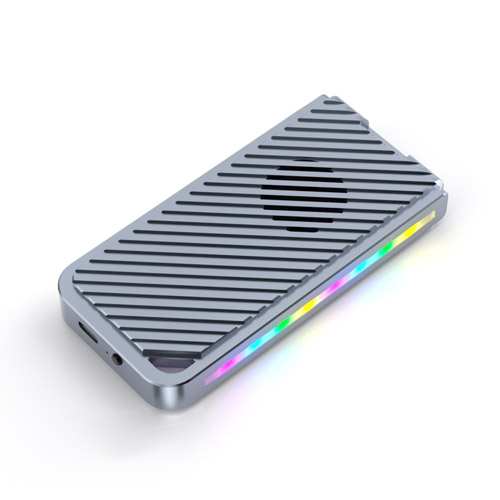
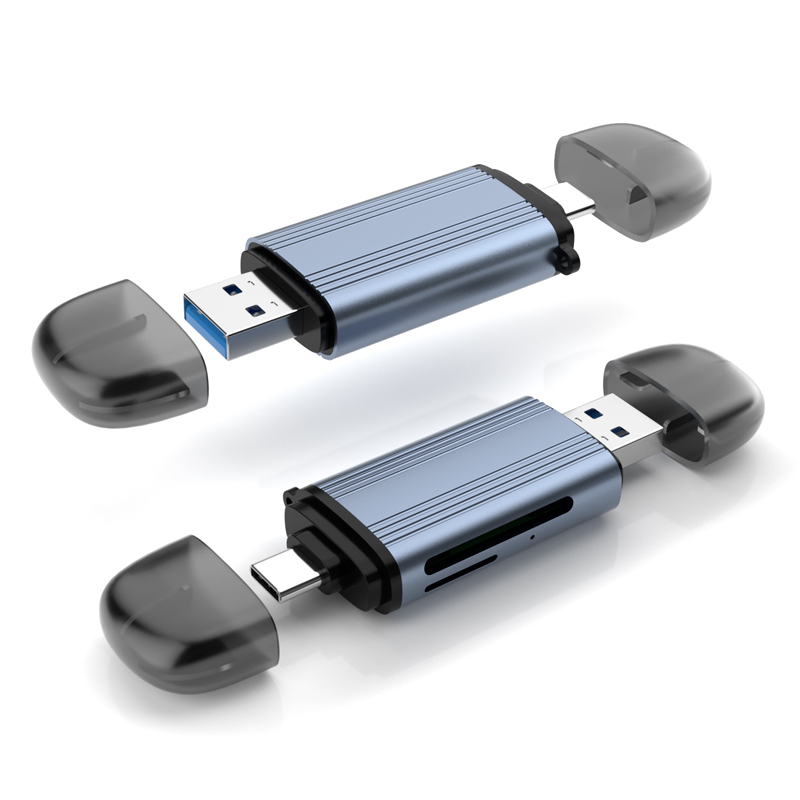
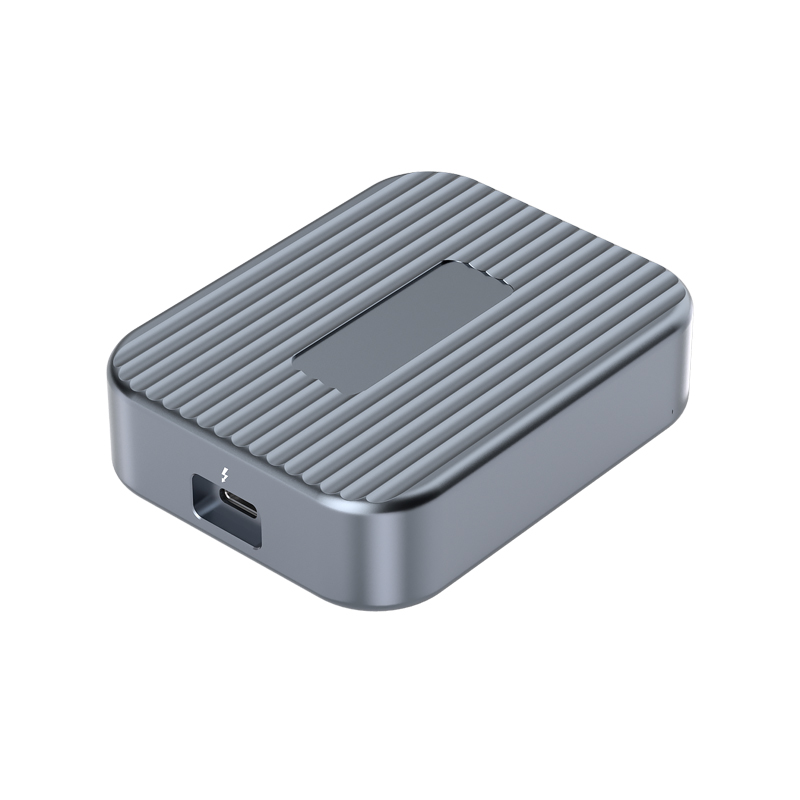
The Portable Solid State Drive (PSSD) is a core device in modern data storage, gradually replacing traditional mechanical portable hard drives. It is not merely a storage container but a high-performance data interaction platform built using NAND Flash memory and high-speed USB interface technology. Compared to traditional Hard Disk Drives (HDD) that rely on rotating platters and read/write heads, PSSDs possess physical characteristics such as zero mechanical parts, low latency, and high shock resistance. This technological innovation not only drastically reduces the transfer time for TB-level data but also fundamentally solves data safety issues related to physical impacts on mobile storage devices.
This article provides an in-depth analysis of how to maximize the utility of portable SSDs from the dimensions of technical principles, application scenarios (gaming, video post-production, data archiving), and security.

Core Technical Advantages: Why Choose a Portable SSD?
For users accustomed to traditional external storage, upgrading to a PSSD represents a qualitative leap in experience. This shift stems primarily from improvements in three core technical dimensions.
1. Breakthrough Transfer Speeds
The read/write performance of portable SSDs is typically measured in MB/s. Mainstream high-performance PSSDs utilize the NVMe protocol combined with USB 3.2 Gen 2x2 or USB 4 interfaces, achieving actual sequential read/write speeds of 1000MB/s or even 2000MB/s. In contrast, traditional mechanical hard drives usually hover around 100MB/s. For users frequently handling 4K/8K high-bitrate video footage, massive engineering files, or large libraries of RAW photos, this speed difference means a transfer process that originally took tens of minutes is compressed into mere seconds, greatly improving workflow time efficiency.
2. Physical Reliability and Portability
Since they no longer contain high-speed rotating disks or precision mechanical arms, PSSDs are naturally resistant to shocks and drops. Their form factor is often as small as a credit card, making them easy to carry. For outdoor photographers or mobile office workers, this means that even if the device suffers an accidental drop or a minor liquid spill during a commute, the data within the storage memory cells remains intact—a physical security advantage that mechanical drives cannot match.
3. Broad Cross-Platform Compatibility
Modern PSSDs are typically pre-formatted with the exFAT file system and equipped with USB-C interfaces, enabling "plug-and-play" functionality. Without complex driver configurations, they serve as an efficient bridge for data exchange, switching seamlessly between Windows PCs, macOS laptops, Android smart devices, and various gaming consoles.
Gaming Applications: Expansion and Operational Mechanisms
As AAA game titles frequently exceed 100GB in size and receive frequent patch updates, the internal storage of consoles and PCs is becoming increasingly strained. PSSDs have become the preferred solution for players to resolve "storage anxiety," though operational mechanisms differ across platforms.
Deep Integration into Productivity and Creative Workflows
Beyond gaming, PSSDs are widely used in professional fields and are key hardware for enhancing productivity efficiency.
1. Video Post-Production and Non-Linear Editing
For video editors, the high throughput of PSSDs allows for multi-track 4K video editing and real-time previewing directly on the mobile drive, without needing to import footage to the local computer. This "edit-on-the-fly" mode significantly reduces the occupancy of the computer's internal storage and enables the rapid transfer of project files between different workstations.
2. On-Site Backup of Imaging Data
For commercial photographers, external storage is the first line of defense for data security. PSSDs that support high-speed writing can quickly back up massive amounts of RAW files captured by digital cameras. Their rugged nature adapts to various harsh outdoor shooting environments, ensuring precious imaging assets remain safe.
3. Mobile Workstations and Portable Systems
Technical professionals can even deploy portable operating systems or independent application environments (Portable Apps) on a PSSD. Regardless of which computer it is connected to, they can boot into a familiar work interface and specialized software via the external drive, realizing a true "pocket workstation" that leaves no trace on the host machine.
Performance Analysis: External PSSDs vs. Internal SSDs
Although the read/write speeds of high-end PSSDs are impressive, in terms of theoretical limits, internal NVMe SSDs directly connected to the motherboard's PCIe lanes (especially PCIe 4.0/5.0 specs) still hold a significant bandwidth advantage, reaching speeds of 7000MB/s or higher.
However, in the vast majority of daily applications (such as office work, game loading, and media playback), the 1000MB/s-2000MB/s speeds provided by PSSDs are more than sufficient. Users rarely perceive a difference from internal drives in actual experience. The core value of a PSSD lies in trading a negligible performance loss for extreme portability and multi-device interactivity.
Data Privacy and Hardware-Level Security
For business users storing sensitive data, confidentiality is paramount. Professional-grade PSSDs on the market are typically equipped with hardware encryption capabilities, such as support for the XTS-AES 256-bit encryption standard. Unlike software encryption, hardware encryption is independent of the operating system and is processed by an onboard chip. Some high-end models even feature physical keypads or touchscreens, offering protection against brute-force attacks, auto-locking, and remote erasure functions. These financial-grade security measures make them the ideal storage solution for lawyers, financial personnel, and managers of classified projects.
Conclusion
The portable solid-state drive has evolved beyond the scope of simple "storage" to become a comprehensive solution integrating high-speed transmission, multi-platform compatibility, and data security. Whether expanding a game library or building an efficient video editing workflow, choosing a PSSD with the right specifications is the optimal solution for optimizing digital life experiences and safeguarding data asset value.