By PURPLELEC | 11 March 2024 | 0 Comments
Three functional modules of USB2.0 hub
USB HUB is used to establish a connection bridge between USB devices and hosts. So USB devices are connected to USB hosts through USB hubs.

In order to allow users to use USB devices more conveniently and concisely, USB hubs and USB hosts implement a lot of complex behind-the-scenes work, thereby greatly improving the friendliness of the use and development of USB devices.
The functions that the USB hub must support are as follows:
1. Connectivity behavior Connectivity behavior
2. Power management Power management
3. Device device and detection Device connect/disconnect detection
4. Bus fault detection and recoveryBus fault detection and recovery
5. High-speed, low-speed and full-speed equipment support
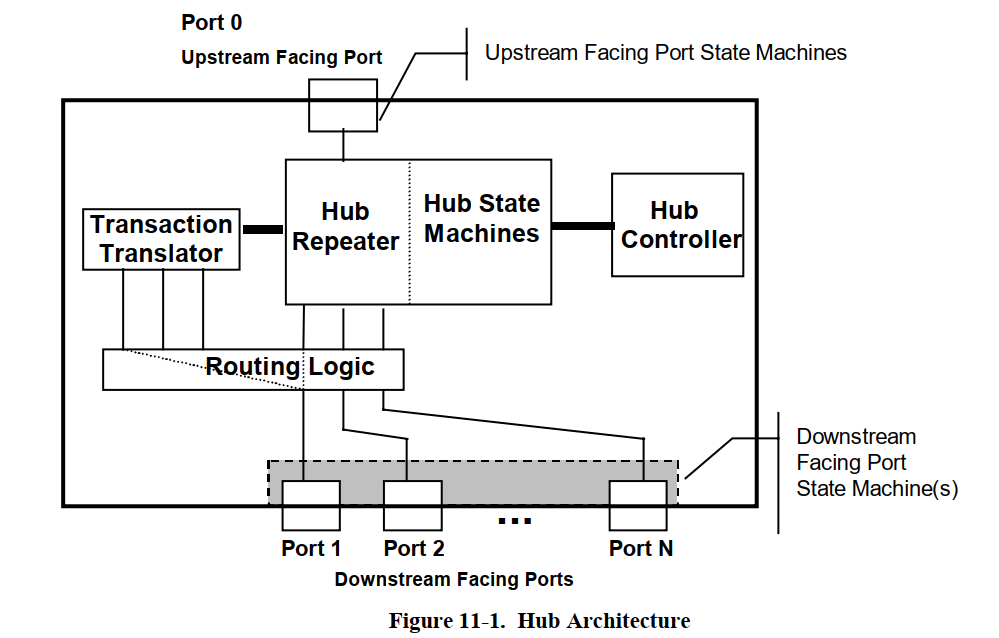
A USB2.0 hub is internally composed of three parts, namely:
1. The Hub Repeater: Responsible for connection setup and disconnection. It also supports exception handling, such as bus failure detection and recovery and connection/disconnection detection.
2. The Hub Controller: Provides a mechanism for host-to-hub communication. Hub-specific status and control commands allow the host to configure the hub and monitor and control its individual downstream-facing ports.
3. The Transaction Translator: responds to high-speed split transactions and converts them into full/low-speed transactions, and connects full/low-speed devices on downstream-facing ports.
Leave a Reply
Your email address will not be published.Required fields are marked. *