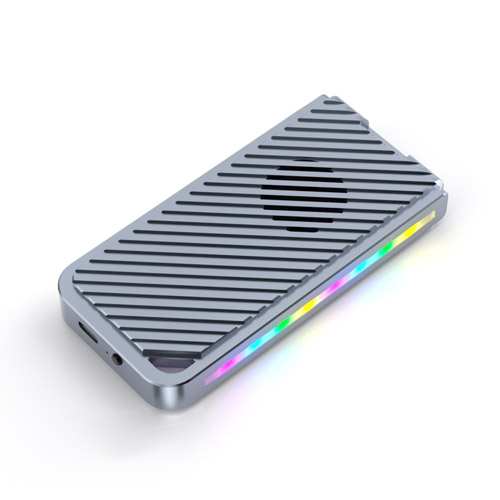
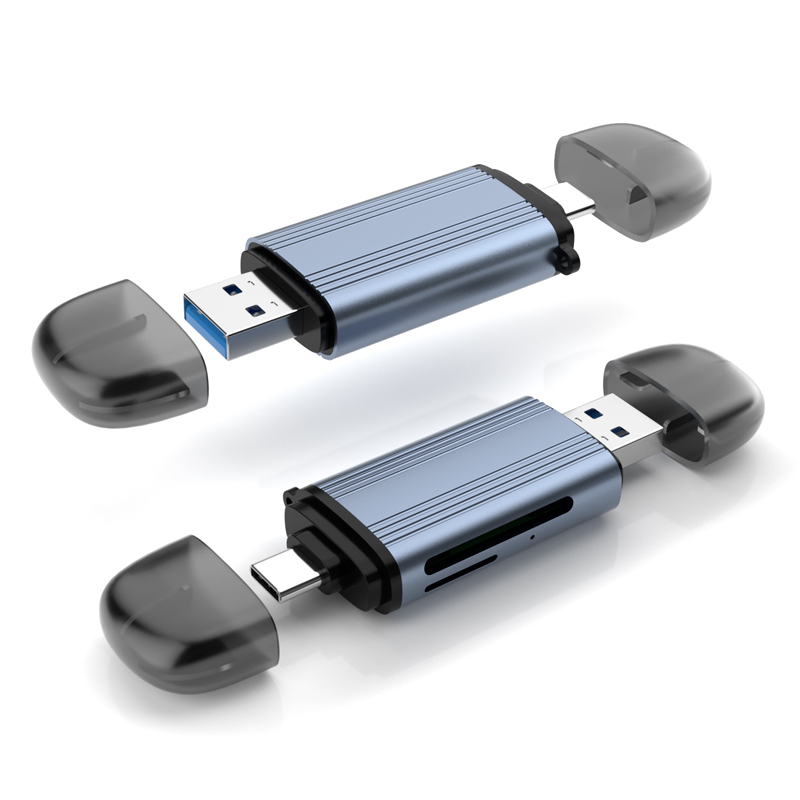
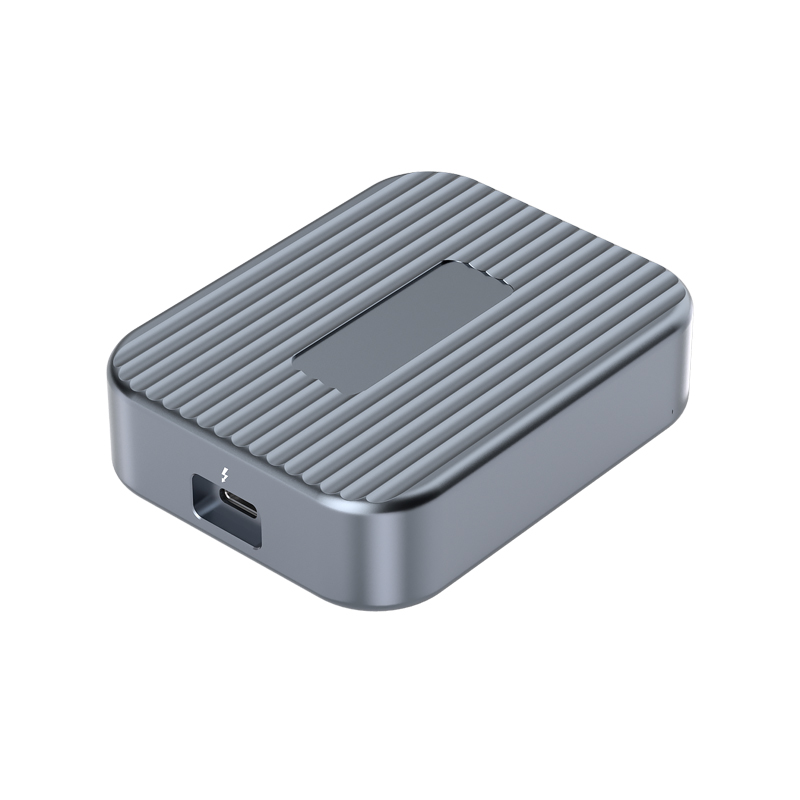
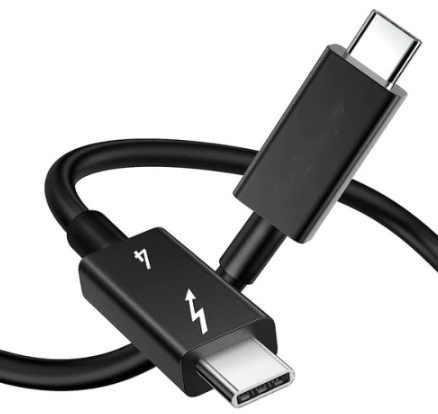
Nowadays, USB-C has become a standard feature in tech products thanks to its powerful charging and data transmission capabilities. Compared to its predecessor, USB Type-A, USB-C interfaces and cables offer faster speeds and smaller sizes, and are widely found in modern laptops, mobile chargers, and other devices. However, the practical application of USB-C is more complex than it appears, with variations and limitations in its use across different tech products.
Key Features
USB-C represents a significant improvement over previous USB versions and has become the most common connection type on the market today. The standard features of all USB-C connectors include:
Industry-standard connectors for transmitting data and power over a single cable.
No directionality, allowing for easy plugging in either way—a key advantage of USB-C.
Identical connectors at both ends of the cable, unlike USB-A/B.
Standard transmission speeds of up to 10Gbps, with speeds up to 40Gbps achievable with Thunderbolt™ 3/4.
Designed to support thinner and lighter devices, USB-C is slim enough for smartphones and tablets. It has replaced classic interfaces like RJ45 Ethernet and USB-A due to its efficiency in video, networking, data transmission, and charging.
Other protocols such as DisplayPort, HDMI, and Thunderbolt™ have also adopted USB-C as their new connector standard.
Alternate modes enable USB Type-C connectors to transmit other signals, such as connecting an external display via the DisplayPort alternate mode (sometimes shown as DP alternate mode) on laptops or tablets equipped with DP.
Generational Evolution
Like other technologies connected to laptops and computer hardware, USB-C cables exist in multiple iterative versions, each with slightly different specifications primarily centered around transmission speed and compatibility.
Naming Conventions
The naming of USB generations depends on speed and the number of channels. The USB Implementers Forum (USB-IF), an organization responsible for maintaining USB compliance and composed of hundreds of companies including Apple, Dell, HP, Intel, and Micro-soft, has revised naming standards to facilitate better understanding by developers and manufacturers. Unfortunately, the new naming scheme has caused some confusion for consumers trying to determine the right products for their home or mobile environments. To clarify how specifications translate into written numbers, we aim to simplify the specifics that determine USB's widespread acceptance. Here is the evolutionary history of USB generations:
USB-C 2.0
Introduced in 2000, USB 2.0 offers a transmission rate of 480Mbps, relatively low by today's standards. Despite significant technological advancements over the past two decades, relatively inexpensive USB-C to USB 2.0 cables are still available, supporting 100W power transmission along with sync and charge functions.
USB-C 3.0 (USB 3.1 Gen 1/2) and SuperSpeed
Eight years later, USB 3.0 brought the next major generational improvement, increasing transmission speeds to 5Gbps. With reconfiguration by the USB-IF, USB 3.0 was renamed USB 3.1 Gen 1, with its Gen 2 version following shortly after. USB 3.1 Gen 1 supports speeds up to 5Gbps, while Gen 2 supports up to 10Gbps. To facilitate marketing and simplify understanding of these differences, the names SuperSpeed USB (USB 3.1 Gen 1) and SuperSpeed+ (USB 3.1 Gen 2) were introduced. Due to the quick familiarity and ease of spreading information about transmission speeds, the concise USB 3.1 Gen format became popular, while the SuperSpeed name is rarely used to distinguish between these two USB standards. Consistent with future USB iteration trends, both USB 3.1 Gen 1 and Gen 2 are backward compatible with USB 3.0 and USB 2.0.
USB-C 3.2
Nearly a decade later, USB 3.2 emerged. The USB 3.2 specification includes four standards, all differentiated by bandwidth and the number of channels.
The USB 3.2 specifications are as follows:
USB 3.2 1x1:
Maximum transmission speed: 5Gbps (SuperSpeed)
Number of data channels: 1
Total bandwidth: 5Gbps
USB 3.2 Gen 2x1:
Maximum transmission speed: 10Gbps (SuperSpeed+)
Number of data channels: 2
Total bandwidth: 10Gbps
USB 3.2 Gen 1x2:
Maximum transmission speed: 5Gbps (SuperSpeed)
Number of data channels: 2
Total bandwidth: 10Gbps
USB 3.2 Gen 2x2:
Maximum transmission speed: 10Gbps (SuperSpeed+)
Number of data channels: 2
Total bandwidth: 20Gbps
Although some USB 3.2 specifications still support USB-A interfaces, the 3.2 version clearly shifts towards the USB-C protocol due to USB-C's ability to charge peripheral devices faster and its smaller size and wider range of uses in office and tech environments. The two single-channel USB 3.2 standards still support USB-A interfaces, while higher-bandwidth connections rely on the new standard: USB-C.
Thunderbolt™ 3
Thunderbolt 3, jointly created by Intel and Apple, utilizes the USB-C protocol to connect peripheral devices to laptop and desktop environments.
USB4—The Future of USB
Although the USB4 standard has not yet fully penetrated the tech landscape, most personal computer users today recognize it as the next step in USB technology's evolution.
From USB 2.0 to 3.2, USB4 introduces a range of new features. Unlike its predecessors, the USB4 protocol simplifies the data transmission experience, requiring only a single USB-C to USB-C cable. USB4 devices must support transmission speeds of at least 20Gbps (2.4GB/s). Using shorter 0.8-meter Gen 3 cables, transmission speeds can reach up to 40Gbps (4.8GB/s).
Key Features of USB4
USB4 supports protocol tunneling for USB 3.2, PCIe, and DisplayPort 1.4a, including DP and Thunderbolt 3 support via alternate modes.
USB4 enables data and display functions through a single USB-C connection and is universally compatible with all existing USB and Thunderbolt products.
Charging Capabilities
All USB4 devices support USB Power Delivery. When a device connects to a USB4 interface, USB PD negotiates a "contract" to deliver power, safely providing up to 100W (5A/20V).
Protocol Tunneling Technology
When devices use the same protocol, they can establish an appropriate connection. Tunneling technology retrieves data from one protocol and sends it to another. USB4 creates USB-C tunnels to establish DisplayPort (DP) and PCIe data connections. This connection is similar to alternate modes but does not require a controller.
For more information on USB, particularly the USB-C protocol, please stay tuned for the second part of this series, coming soon.