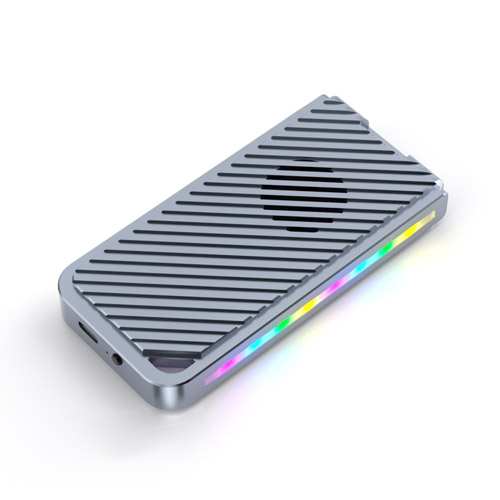
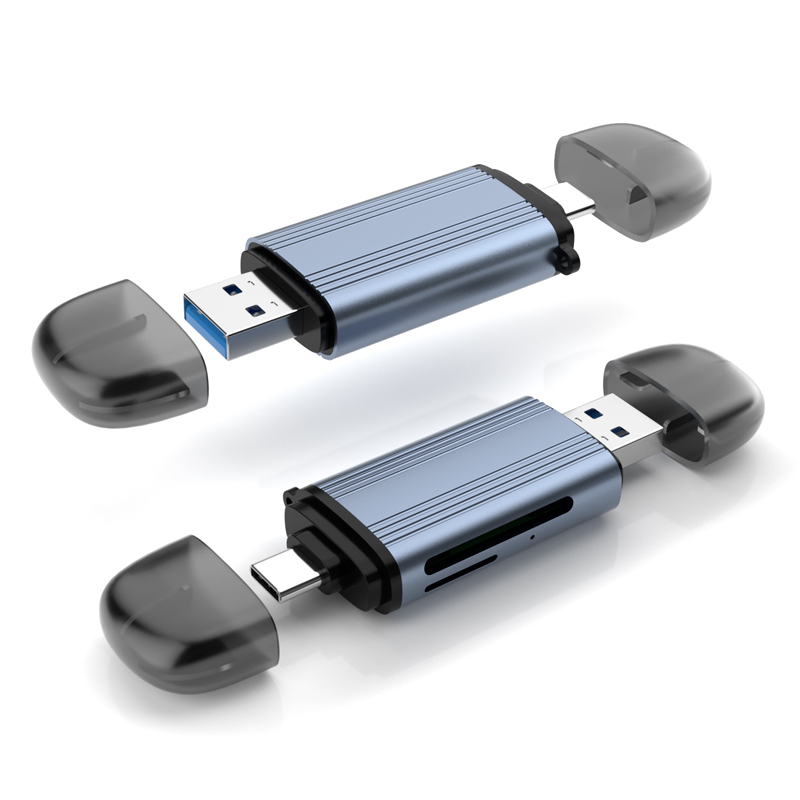
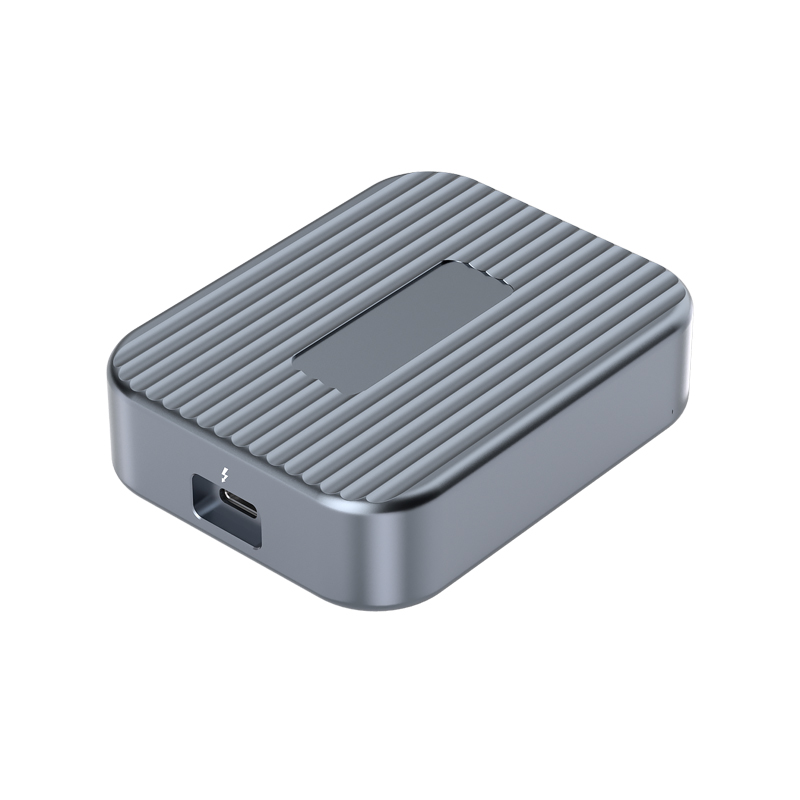
Purplelec docking stations are meticulously designed, incorporating a wide array of ports to cater to a multitude of needs and scenarios. The choice of port configuration often hinges on the accessories to be connected, portability requirements, and display setups.
USB - A Ports: A Time - Honored Classic, Still Indispensable
USB 3.0, or USB Type - A, stands as one of the most well - recognized ports in the computing world today. For years, it has served as the standard for data transfer, as well as for connecting keyboards, mice, and a variety of tech accessories. Although many current laptops and PC docking stations are shifting towards USB - C for faster data transfer and a more modern aesthetic, numerous tools and peripherals in office or remote - work settings still rely on these ports. Therefore, Purplelec docking stations retain USB - A ports while offering modern port connections, ensuring broad compatibility.
USB - C Ports: The Rising Star with Powerful Functions
As the successor to USB - A ports, USB - C ports have become ubiquitous and are widely used in numerous high - end tech products. Their slimmer profile makes them a perfect fit for the sleek designs of new laptops, and they are rapidly replacing USB 3.0 interfaces. Unlike the 4 - pin system of USB Type - A interfaces, USB - C ports employ a 24 - pin system, enabling faster data transfer speeds.
Moreover, USB - C supports a variety of power delivery protocols, allowing it to charge tablets, smartphones, laptops, and other devices that traditionally required separate power sources. Some systems also support transmitting DisplayPort signals through USB - C ports, facilitating the transfer of display signals. These signals can be adapted to standard HDMI or DisplayPort signals or directly connected to USB - C monitors. Future articles will delve deeper into all USB - C interfaces and their corresponding markings.
Thunderbolt™ 3 / Thunderbolt™ 4 Ports: High - Speed Transmission for Professional Use
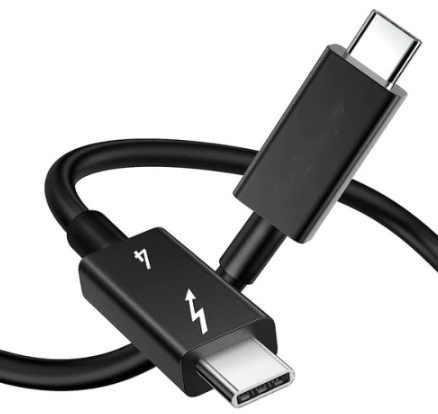
Thunderbolt 3, developed through a collaboration between Intel and Apple, shares the same physical appearance as a standard USB - C port, utilizing the USB Type C interface. However, it's important to note that not all host connections, cables, and devices with USB - C interfaces support Thunderbolt 3. While USB - C devices are compatible with Thunderbolt 3 host connections, Thunderbolt 3 devices are generally not compatible with standard USB - C host connections. To identify whether a component is a Thunderbolt 3 device, look for the Thunderbolt™ 3 marking with a lightning symbol; strictly speaking, USB - C devices do not feature this symbol.
Thunderbolt™ 3 connections offer exceptional bandwidth and resolution capabilities, with data transfer speeds reaching up to 40 Gbps, four times faster than standard USB - C 3.1 Gen 2. Although it uses the USB - C interface, its compatibility has specific requirements. Some docking stations support both protocols. To ensure device compatibility, always confirm whether your host, cable, or device is USB - C or Thunderbolt 3.
Building on the success of Thunderbolt 3, Intel developed Thunderbolt 4 with several underlying improvements. A major upgrade is the standardization of sending video signals to two 4K displays or one 8K display. This is significant because some Thunderbolt 3 systems only support a single 4K display. The increased bandwidth in Thunderbolt 4 connections enhances the transmission speed of high - resolution videos. Additionally, through daisy - chaining, up to six Thunderbolt - compatible devices can be connected without directly linking to a laptop or PC, providing greater flexibility for office spaces.
HDMI Ports: High - Definition Transmission, Widely Applied
HDMI (High - Definition Multimedia Interface) is a common port used to transmit audio and video signals from laptops, PCs, or other devices to monitors, game consoles, or projectors. Due to its versatility and support for high - definition resolutions, HDMI ports are frequently included in docking stations.
Display Ports: Multiple Options to Suit Different Needs
Similar to HDMI ports, DisplayPort (DP) and Mini DisplayPort (mDP) ports are commonly found on many laptops for transmitting video and audio signals to external displays. Full - sized DisplayPort ports are more prevalent in docking stations and larger laptops, while Mini DisplayPort ports are often seen on devices like MacBook Pros and tablets.
Ethernet Ports: Stable and High - Speed Internet Connectivity
It comes as no surprise that most home users and professionals depend on reliable and fast internet connections. Nearly all Purplelec docking stations are equipped with Gigabit Ethernet ports, offering quick and stable internet speeds with a single, easy connection.
Conclusion: A Wealth of Ports, All in One Dock
Ultimately, PCs and laptops should empower users to connect devices and achieve optimal layouts. However, this is not always the case. To address this, Purplelec has developed a range of docking stations that integrate all the ports mentioned above and more, fulfilling a diverse range of user needs.